Spring 2026 marks the official rollout of the Enhanced ACT for all state and district School Day testing, a shorter, digital-friendly format that began with national weekend testers in 2025.
- Shorter overall duration — Just over 2 hours instead of 3, with total questions dropping from 215 to 171 and more time per question.
- Optional Science section — Now flexible like Writing, students can skip it entirely or take it separately without affecting the main 1-36 composite score, depending on the state.
- English — Reduced from 75 to 50 questions, still 35 minutes.
- Math — Reduced from 60 to 45 questions in 50 minutes, with multiple-choice answers now offering 4 choices instead of 5.
- Reading — Reduced from 40 to 36 questions, but time increased from 35 to 40 minutes, with generally shorter passages.
- Science — Unchanged at 40 questions in 40 minutes.
- What stays the same — The 1-36 composite scoring scale, the choice between digital or paper delivery, and full acceptance of new scores by colleges and scholarship programs exactly as before.
The ACT is undergoing its most student-friendly redesign in decades, with shorter test duration, optional sections, and a fully digital delivery model. These changes, rolling out nationally in Spring 2026, aim to reduce fatigue, increase flexibility, and better reflect how students perform in real academic settings.
Big changes are underway for the ACT (American College Testing), which is offering the digital version of the test to a larger population of students. Plus, it is making “enhancements” to make the test more flexible and easier to manage.
“Continuing our legacy of innovation and guided by feedback from students, educators, and experts in K-12 and higher education, we are implementing two fundamental changes to the ACT test.”
- Janet Godwin, CEO, ACT
The two fundamental changes that Janet is talking about are flexibility to opt for science and a shorter test duration.
The ACT has been available as a digital test for school-day and international testers since February 2024. Now, it’s being rolled out to more test takers to make the test more accessible.
The digital ACT changes, rolled out for national testing in April 2025 and will be implemented for school day testing in April 2026, include a shorter test duration, fewer questions, more time per question, an optional science section, and a revised composite scoring system. The ACT's decision to embrace digital testing reflects an understanding of student preference for digital testing. It’s also a response to losing significant market share to the SAT, which can only be taken online.
In this article, we will explore the changes to the ACT exam in detail and their impact on students. We’ll also provide actionable strategies for tutors and families to deal with these changes.
Understanding the Digital ACT Changes
The ACT has constantly been evolving during its 65-year history, including a major reformatting in 2016. The latest set of changes is aimed at reducing stress for students. Here's an overview:
Let's understand each of these changes in detail:
Choice between digital ACT and paper version
While the digital version of the ACT was always available, only select locations could access it. Now, the ACT has been opened up to more students- presumably to be at par with the SAT, which can only be taken online.
Besides, students can choose to take the paper-and-pencil version if they’re more comfortable with it.
Shorter Test Duration
The reduction in test duration is a welcome change for many students who have found the traditional ACT to be a grueling and time-consuming experience. Currently, at three hours, the ACT has been reduced to one-third the duration, which translates to around two hours--depending on which version of the test you take.
By shortening the test, the ACT aims to reduce student fatigue and distraction, leading to more accurate and representative scores.
The required sections (English, reading, math) will take 2 hours and 5 minutes to complete.. If you choose to take the optional science section, the test will be 2 hours and 40 minutes long.
The test section options are:
- Core (English, reading, math)
- Core + Science
- Core + Writing
Fewer Questions
44 fewer questions will appear on the exam.
The reading passages and the English section will be shorter, and there will be fewer questions per section.
While the total number of questions will be reduced, the content and skills assessed will remain the same. This means that students will need to be even more efficient and strategic in their approach to each question.
More Time Per Question
With fewer questions to answer in a shorter amount of time, students will have more time to devote to each question. This is particularly beneficial for students who struggle with time management, tend to get fatigued, or feel compelled to rush through the test. It will also allow students to carefully consider each answer choice and avoid careless errors.
Optional Science Section
Like the writing section, the ACT has decided to make the science section optional.
Previously, all students were required to take the science section, regardless of their interests or strengths.
Now, students can choose whether to include the science section in their composite score, allowing them to focus on their areas of expertise and potentially improve their overall performance. It is recommended that students who want to major in science or a STEM field should choose this section.
Colleges can decide whether they will treat the science as required, recommended, or optional.
Revised Composite Score
The ACT composite score will now consist only of English, math, and reading scores. This change reflects the ACT's emphasis on these core academic skills, which are considered essential for success in college.
Students who choose to take the science section will receive a separate section score, similar to the writing score, which can be used for informational purposes or to meet specific college requirements.
Scoring will continue to be done on a 1-36 scale with no changes to state-specific achievement standards or ACT benchmarks.
Math Answer Choices
The reduction in the number of answer choices in math questions from five to four may seem like a minor change, but it could have a significant impact on student performance. By eliminating one answer choice, the ACT is reducing the probability of guessing correctly, making it more important for students to have a solid understanding of the underlying mathematical concepts.
Linear Testing
Unlike the digital SAT, which uses section adaptive testing, the ACT will continue to be a linear test. All students have the chance to demonstrate their best selves throughout the test.
Why the ACT Made These Changes
The ACT’s move toward a shorter, more flexible, and digital-first format was driven primarily by the following factors:
- Student Feedback: Students consistently reported feeling rushed, and many found the longer, paper-based format to be a barrier, as noted by U.S. News & World Report.
- Competition with the SAT: As the College Board revamped the SAT with a digital-first approach, the ACT responded by modernizing its own format to remain a strong alternative.
- Modernization Goals: The ACT aimed to create a more streamlined, digital-friendly test that better reflects current educational standards and classroom testing environments.
Impact of the Changes to the ACT Exam
Students, tutors, and families need to prepare, both mentally and physically, for the enhanced ACT. These are our recommendations:
Impact on Tutors
The ACT modifications present both challenges and opportunities for tutors. On the one hand, tutors will need to adapt their teaching strategies to align with the new test format and content. This may involve developing new lesson plans, practice materials, and assessment tools.
On the other hand, the changes also provide tutors with a chance to showcase their expertise and help students navigate the evolving focus of the ACT.
By staying informed about the latest developments and developing innovative teaching methods, tutors can position themselves as valuable resources for students seeking to excel on the ACT.
Impact on Students
The ACT changes will have a direct impact on students preparing for the exam. Students will need to adjust their study habits, test-taking strategies, and overall approach to the ACT. The shorter test duration, fewer questions, and more time per question may require students to develop greater efficiency and focus.
The optional science section also presents students with a strategic decision. They will need to carefully consider their strengths and weaknesses, as well as the requirements of their target colleges, to determine whether to include the science section in their composite score.
Actionable Strategies for Tutors
To effectively guide students through the digital ACT changes, tutors can implement the following strategies:
1. Familiarize Yourself with the New Format
Stay up-to-date on the latest ACT changes, including the new test format, question difficulty levels, and time per question.
2. Revise Your Teaching Strategy
Adapt your lesson plans and teaching materials to align with the new ACT format. This may involve creating new practice questions, sample tests, and assessment tools.
3. Emphasize Time Management
Help students develop effective time management strategies for the ACT. Even though there will be fewer questions, the ACT has not provided any information yet on whether the difficulty level of the questions will increase.
Teach students how to allocate their time wisely, pace themselves throughout the test, and avoid getting bogged down by difficult questions.
4. Focus on Core Skills
Reinforce students' understanding of the core academic skills assessed on the ACT. This includes English, math, and reading comprehension.
5. Offer Personalized Guidance
Provide students with individualized support and guidance based on their strengths, weaknesses, and goals. This may involve tailoring your teaching approach to meet each student's specific needs.
6. Incorporate Technology
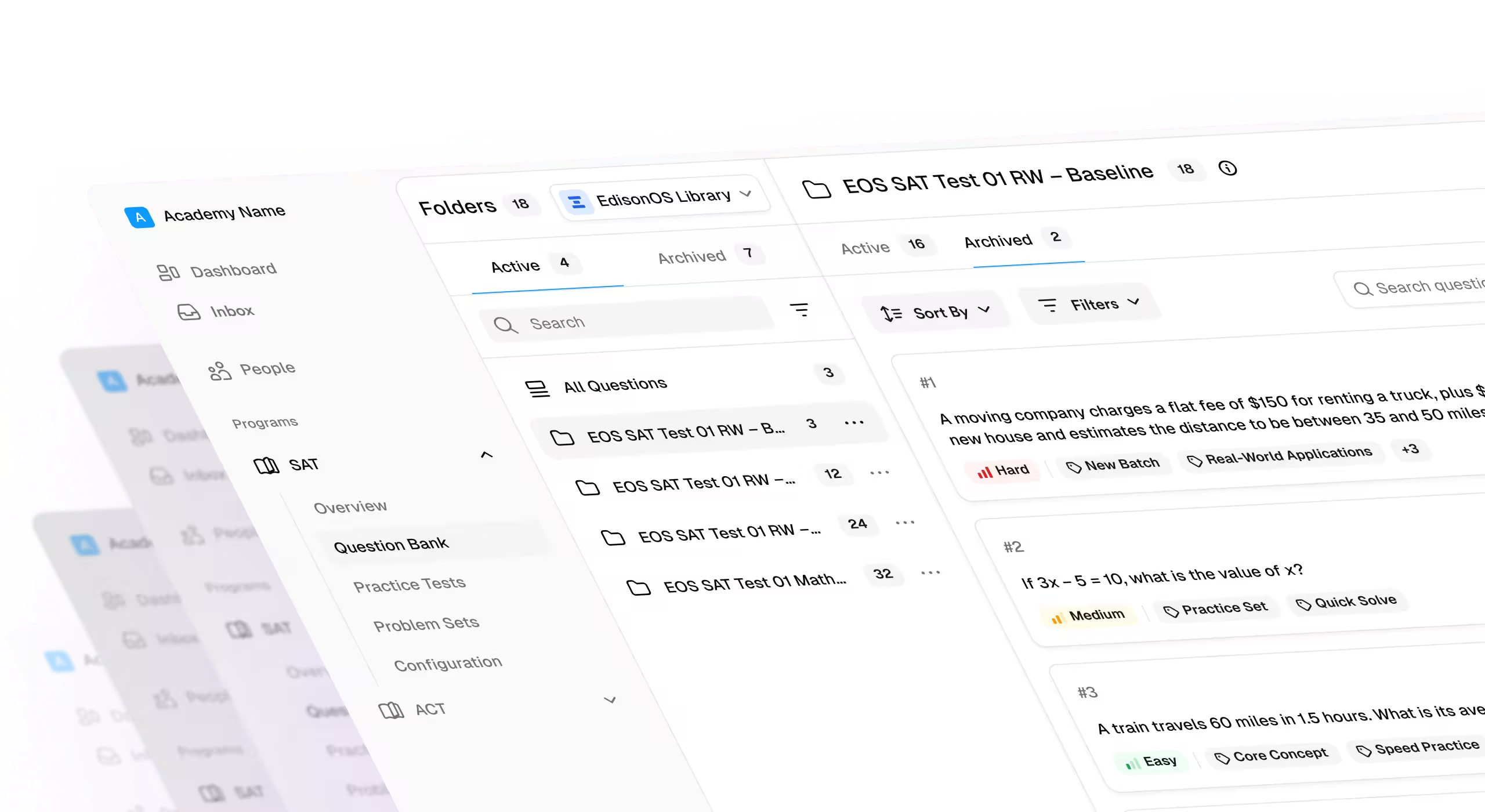
Leverage technology to enhance your tutoring sessions. This may include using online resources, interactive software, and virtual practice tests administered via a platform like EdisonOS. It also allows you to offer personalized learning plans, practice questions, and feedback to help students improve their scores.
7. Mock Exams
Simulate the real test environment for your students. This can help students get used to the pressure and time constraints of the actual ACT exam.
8. Provide Feedback
Give your students timely and constructive feedback on their performance. This can help them identify areas for improvement and track their progress over time.
Practical Tips for Students and Parents
To help students succeed on the ACT, families can implement the following tips:
1. Start Preparing Early
Encourage students to begin preparing for the ACT early on during their high school. This will give them enough time to master the material and develop effective test-taking strategies.
2. Create a Study Plan
Develop a realistic and comprehensive study plan, which includes specific goals, timelines, and resources.
3. Utilize Practice ACT Tests
Encourage students to take practice tests regularly. This will help them become familiar with the test format, identify their strengths and weaknesses, and track their progress over time.
4. Seek ACT Tutoring Support
Consider hiring a qualified tutor to provide students with personalized guidance and support. A good tutor can help students learn the concepts, develop effective test-taking strategies, and build confidence.
5. Stay Informed About Digital ACT changes
Visit the ACT website frequently to learn about any changes to the format of the test. This will help you guide students effectively and make informed decisions about their test preparation.
6. Encourage students to focus on their strengths
Students should decide whether to include the science section based on their strengths, college requirements, and overall goals. If they want to pursue science courses in college, they should take the optional science section.
EdisonOS: Digital ACT Practice Platform
The new ACT format, intended to modernize standardized testing for college admissions, is bound to overwhelm students at first. Although the scoring pattern remains the same, the difference in question difficulty and time per question may affect how a student attempts the test.
To enable them to take the test to the best of their abilities, you can offer updated, personalized mock tests in real-world environments via EdisonOS. You can also share detailed performance reports with parents to demonstrate how your battle-tested teaching methodologies are helping their children learn better.
To receive a walkthrough of how this works, book a demo to know more.